Procedures
Your care
About
Your healing has already been planned.
Send your MRI or request a consultation, and we will respond within one business day.
2780 E. Barnett Rd, Suite 200, Medford, OR 97504
Articles
Articles on shoulder conditions, surgery decisions, and recovery.
Rotator Cuff
Sling for 4 to 6 weeks, strength work at 12 weeks, gym at 4 months. The full recovery timeline after rotator cuff repair.
October 20, 2026
Instability & Labrum
A torn labrum rarely reattaches by itself, but many patients recover without surgery. When rehab works and when a repair makes sense.
September 25, 2026
Peptide Deep Dive
Mechanistically compelling, preclinically supported, clinically underinvestigated — an honest assessment.
July 20, 2026
A multicenter study of 47 patients asks whether an all-arthroscopic remplissage can match open Latarjet in shoulders with more than 15% glenoid bone loss.
July 6, 2026
After just two dislocations, 86% of patients already have bone damage requiring more than a simple repair.
June 22, 2026
In high-risk contact athletes, adding remplissage cut the redislocation rate from 66.7% to 4.2%.
June 19, 2026
Shoulder Replacement
Every patient in our series returned to yoga after shoulder replacement, and 80% said they practiced better than before.
May 27, 2026
The all-inside knotless technique developed at Oregon Shoulder Institute removes the subacromial step from remplissage entirely.
May 12, 2026
The commonly quoted 25-pound limit is not supported by robust data. Here is why I individualize instead.
December 4, 2025
Most patients wear a sling for 4 to 6 weeks — but the hand and elbow can and should keep moving.
November 6, 2025
Synthetic and biological patches, what each does, and when a large or retracted tear calls for one.
October 16, 2025
Nutrition & Wellness
Vitamin C, vitamin D and protein each do specific work during tendon healing. Here is what and where to find them.
June 3, 2025
Age is a factor in shoulder replacement, but it is rarely the deciding one. Here is what actually matters.
April 8, 2025
Age alone should not disqualify you from rotator cuff repair. Overall health, rehabilitation potential and your goals matter far more.
March 5, 2025
Up to 90% report short-term improvement with therapy, and around 70% long term — but the studies rarely compare against surgery.
January 8, 2025
For the small group with persistent pain after replacement, arthroscopy can be treatment rather than just diagnosis.
April 1, 2023
Remplissage is a powerful treatment for shoulder dislocations. How we use it to reduce the chance of recurrence.
February 1, 2023
A tendon segment normally discarded during shoulder replacement may help the subscapularis heal.
January 15, 2023
A stage-by-stage timeline from the first four weeks through to full activity at six months.
March 18, 2020
About 90% of shoulder replacements are intact at 10 years and 80% at 20 — but age and implant design matter.
September 22, 2019
There is no single right age. Four questions that make the decision case-specific rather than arbitrary.
May 2, 2019
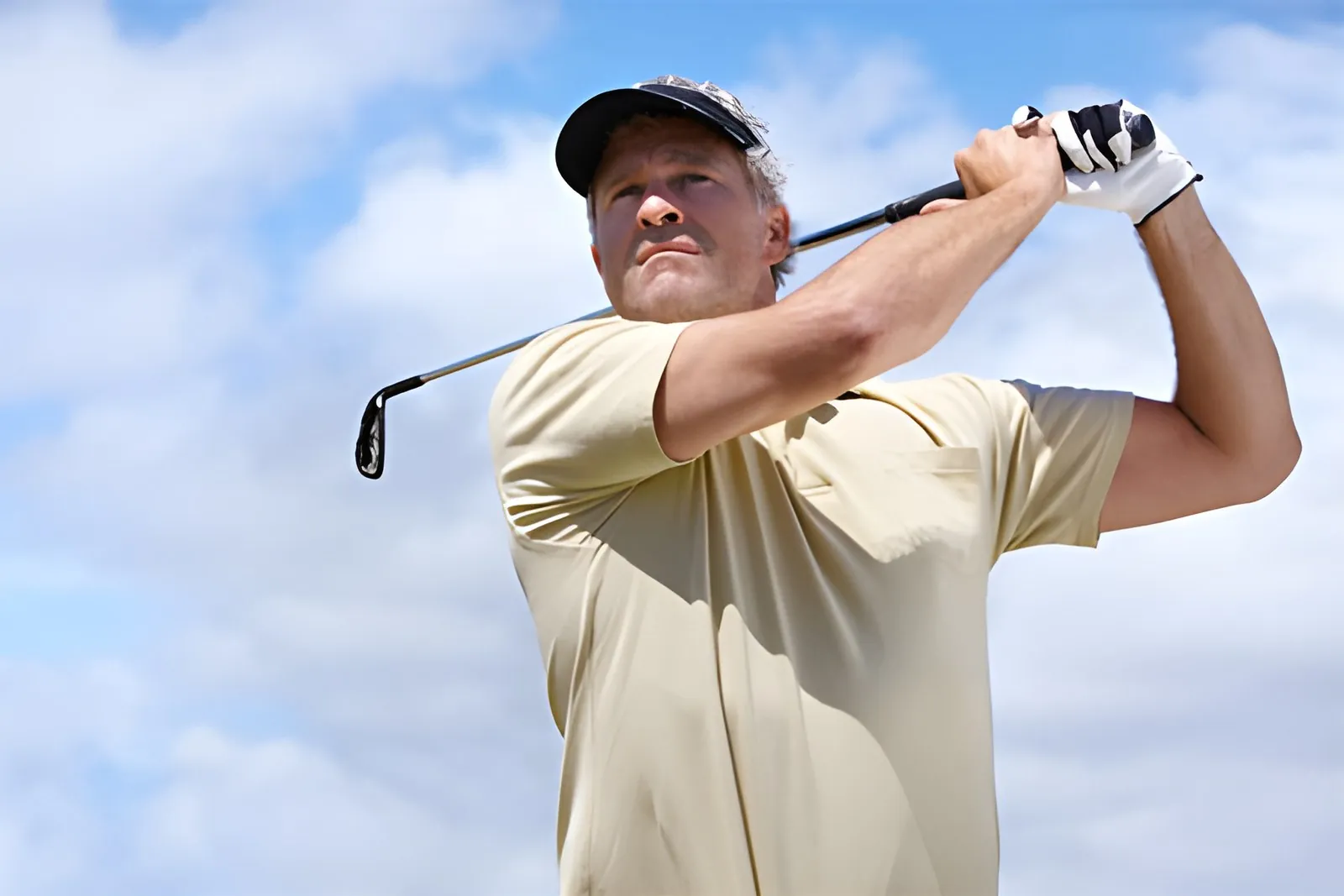
The vast majority of people return to golf after rotator cuff surgery. Here are the recovery milestones.
March 13, 2019
Patients who waited more than six months after the first dislocation were more likely to keep dislocating.
February 24, 2019
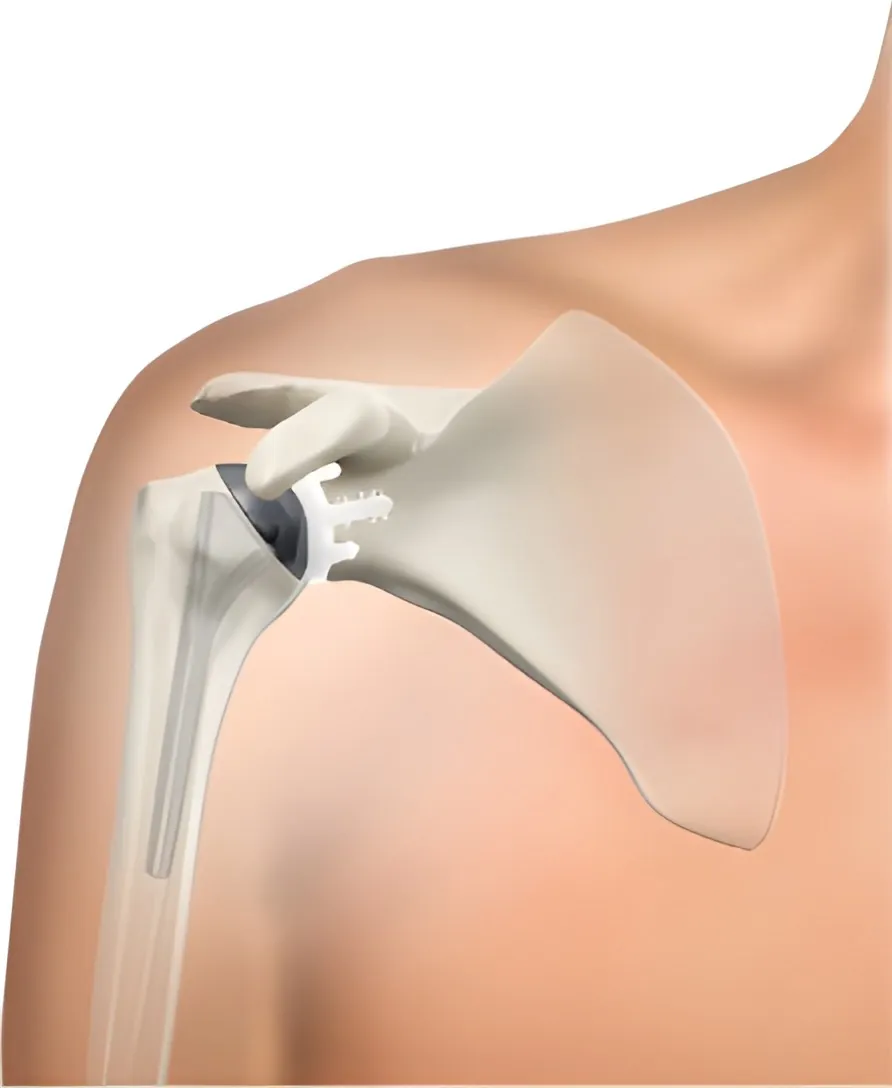
How the two most common shoulder replacements differ in design, indications and function afterwards.
November 22, 2018
About 70% of our shoulder replacements are same-day procedures. Here are the factors that determine candidacy.
November 5, 2018
Six months appears to be a reasonable window. Beyond it, tears progress and healing potential drops.
January 30, 2018
Recurrent instability was 4 times higher, and repeat surgery 6 times higher, in patients with multiple dislocations.
December 20, 2017
Atrophy was long taught to be irreversible. Recent evidence shows it can improve — especially when the repair heals.
December 15, 2017
90% of athletes returned to play the following season after arthroscopic repair, against 40% with therapy alone.
December 4, 2017
At ten years, 92% of patients were satisfied and redislocation was comparable to open surgery.
Between 90% and 100% of patients return to golf after shoulder replacement — and many play better than before.
March 13, 2017
A multimodal approach means most of our patients take very little narcotic medication after surgery.
March 10, 2017
67% of patients who had a repair on one side had a tear in the other shoulder, against 11% of controls.
June 18, 2014
Published outcomes show no difference in function or healing between patients in their sixties and their seventies.
June 2, 2014
At five years, self-reported quality of life after reverse replacement matched that of the normal population.
January 1, 2014
Functional outcomes look similar, but healing rates do not — and healing is what determines the long term.
November 11, 2013
The reverse replacement solved problems that had no solution — but in younger patients it may be reached for too soon.
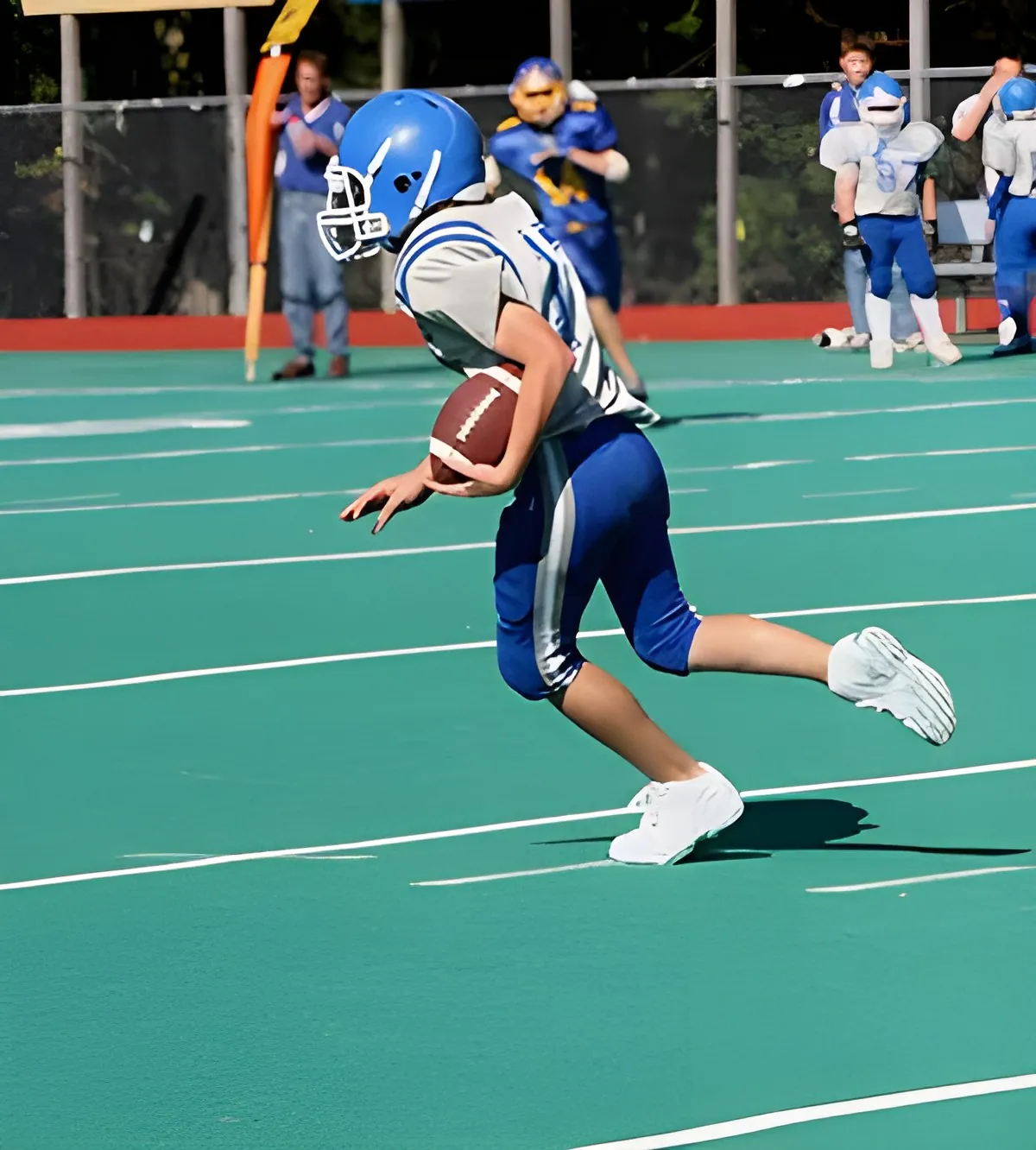
Under 20, the chance of re-dislocating after one traumatic dislocation is about 75%. Repair drops it to 7%.
A full-thickness rotator cuff tear does not reattach on its own. What the research shows, partial vs full tears, and when to watch or act.
October 17, 2013
At ten years, no hemiarthroplasty patients were pain free, against 42% of total shoulder patients.
September 30, 2013
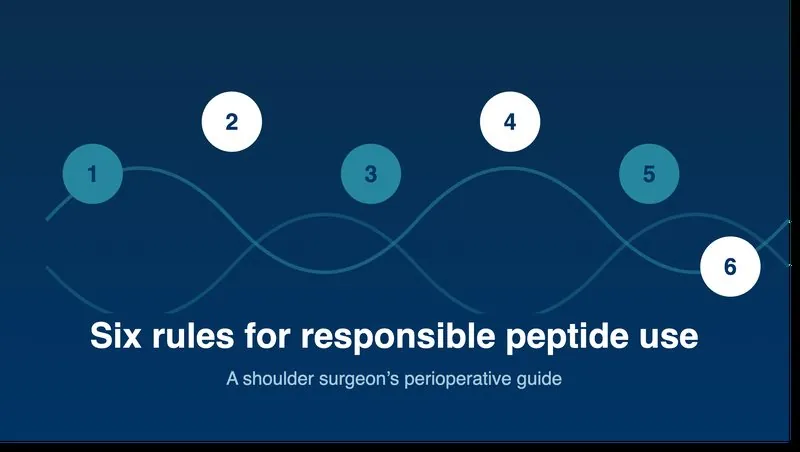
Six non-negotiable rules that separate physician-supervised optimisation from self-experimentation.
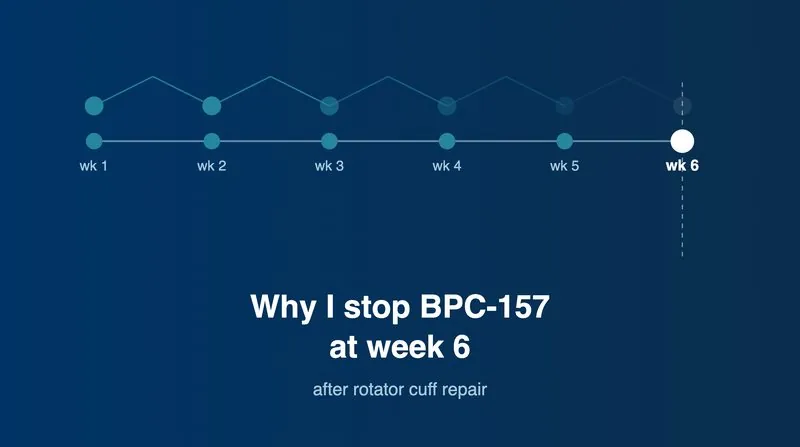
Re-tear rates stay stubbornly high, and in most cases it is not a failure of technique. It is a failure of biology.
Shoulder arthroplasty adds a wound-healing demand that rotator cuff repair does not.
Two different receptors, one common goal — and why timing relative to sleep matters enormously.
Pituitary selectivity is what makes ipamorelin the sensible first step rather than synthetic growth hormone.
The protocol should follow the biology, not the other way around.
Returning to sport after a rotator cuff injury, and the precautions that keep you from re-injuring the shoulder.