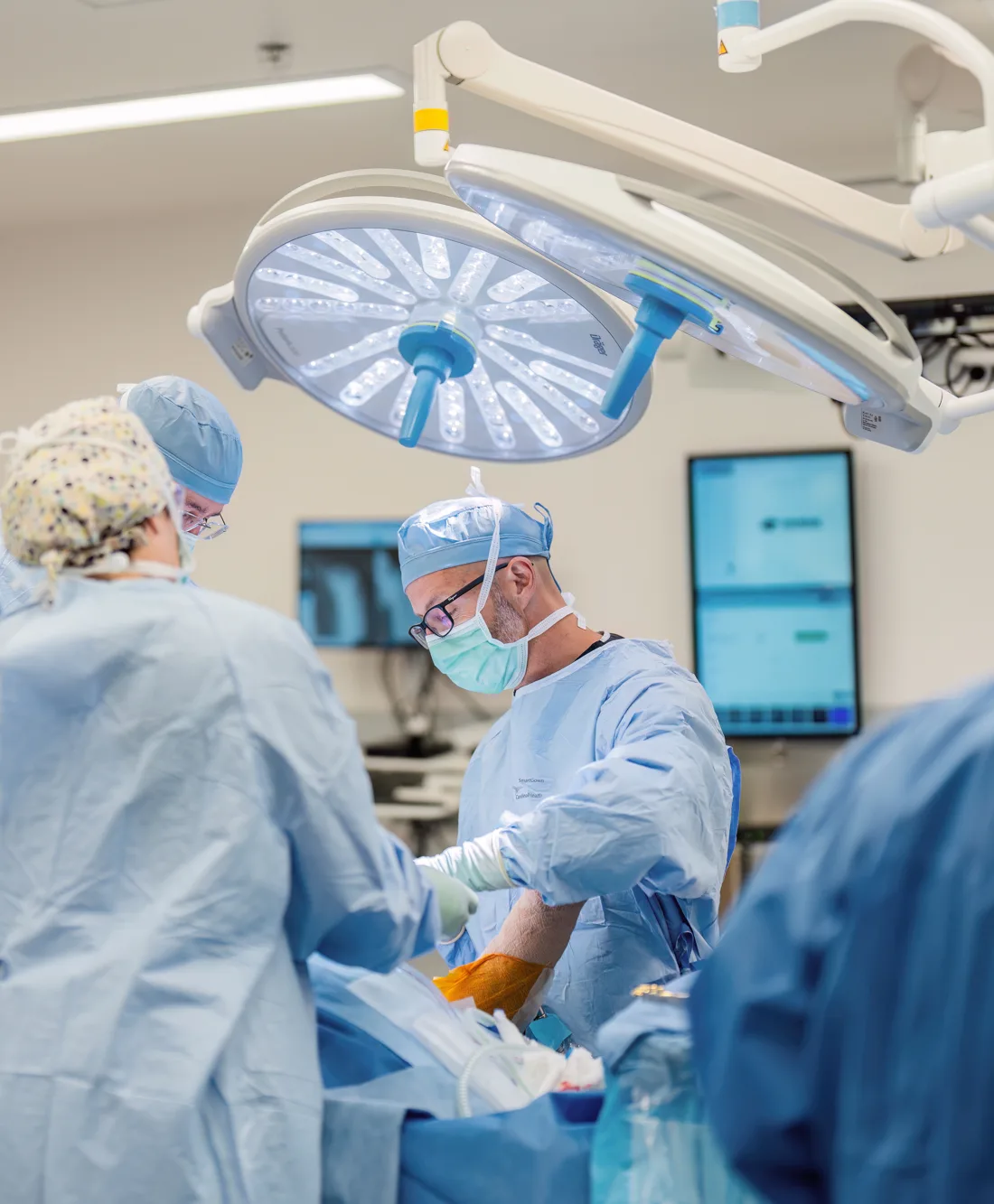
A new shoulder, planned in 3D, and home the same day.
Anatomic and reverse replacement for arthritis, irreparable tears, and failed prior surgery. Dr. Denard trained in Lyon with Dr. Gilles Walch, whose work defined modern shoulder arthroplasty.
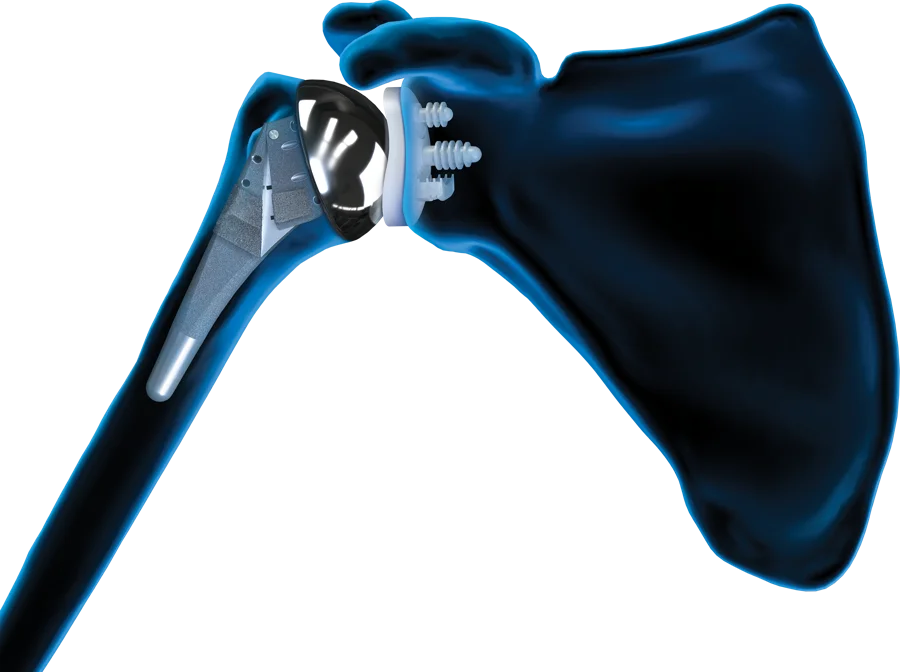
How arthritis usually shows up
- Deep, grinding pain with movement.
- Stiffness that makes reaching behind you or overhead difficult.
- Pain that disturbs sleep.
- X-rays that show "bone on bone."
Or a rotator cuff tear so large and long-standing that the joint itself has worn, which is where a reverse replacement is often the right answer.
Send Your MRI →Every replacement is planned before the first incision.
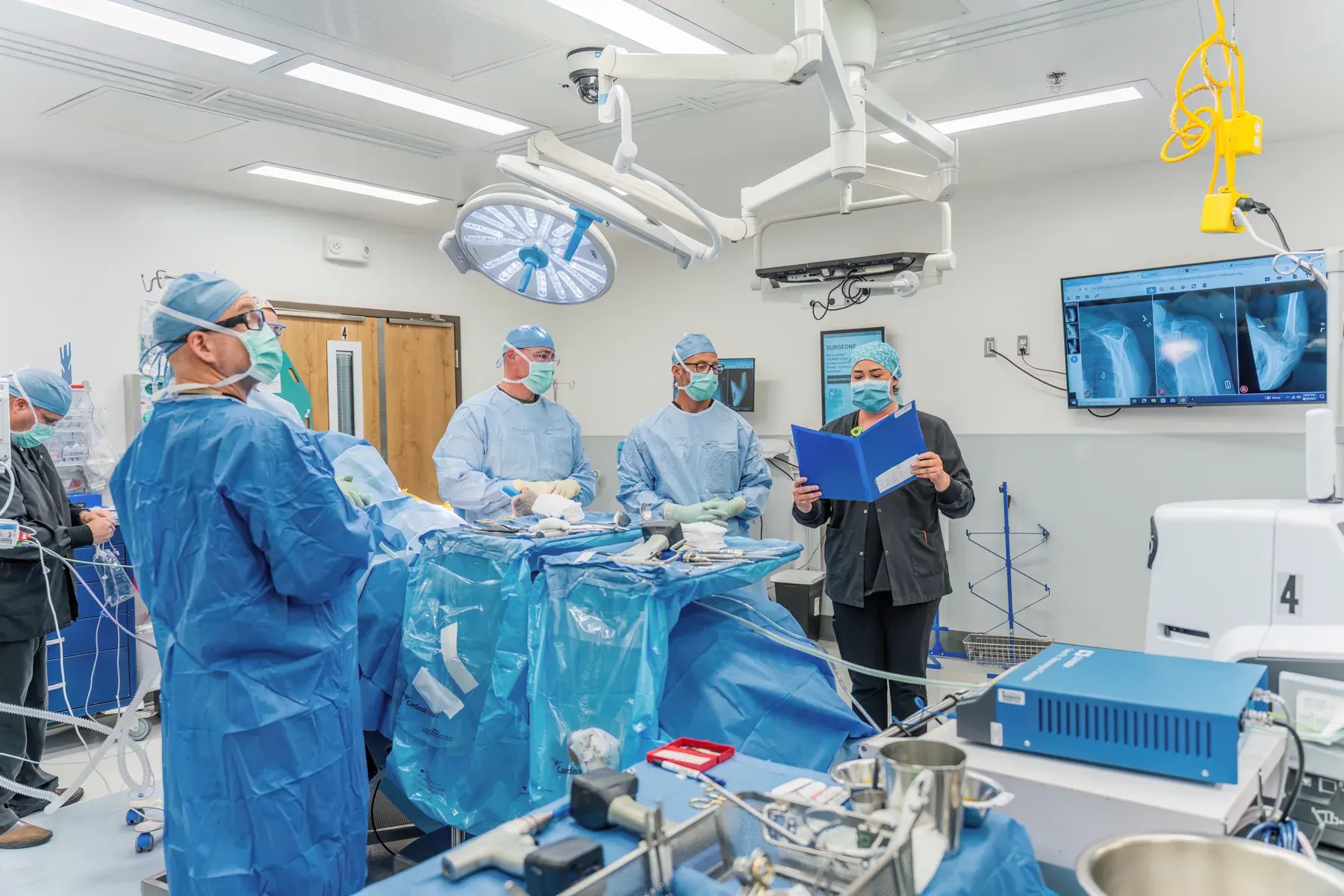
Dr. Denard plans each replacement with virtual implant positioning: a 3D model built from your CT scan, on which the implant is sized and positioned before surgery. That plan is carried into the operating room. He works in product development with Arthrex and has helped refine the implants and instruments he uses, which means the tools are ones he understands from the inside.
Anatomic replacement resurfaces the ball and socket and preserves your rotator cuff. Reverse replacement changes the joint's geometry so the deltoid muscle can power the arm when the cuff cannot. Which one is right depends on your cuff, your bone, and your goals, and the MRI and CT review is where that decision is made.
Approximately 95 percent of Dr. Denard's replacement patients go home the same day, with a nerve block, multimodal pain control, a call from him that evening, and a written protocol that starts the next morning.
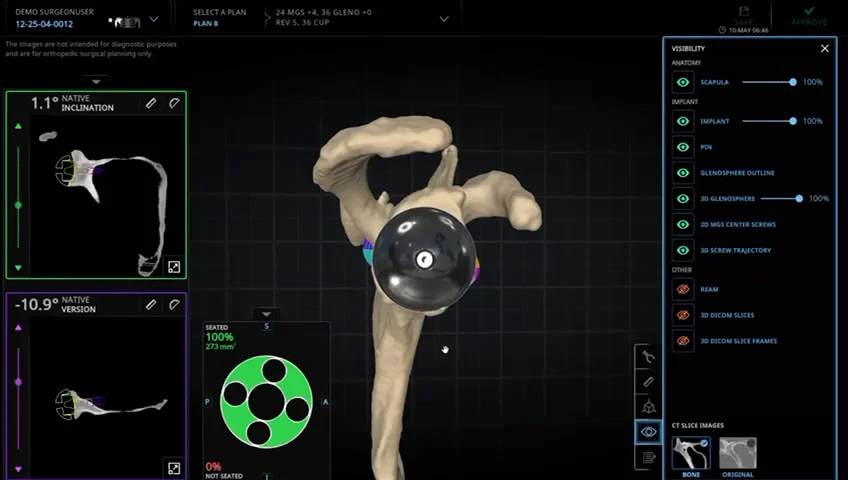
3D planning
Implant size and position chosen on your scan, not in the room.
Same-day discharge
Roughly 95 percent of replacements go home the day of surgery.
Nutrition and PRP
Loading two weeks before, PRP (platelet-rich plasma) at surgery with the Premium and Platinum Care Programs, and a protocol designed for bone and soft tissue healing.
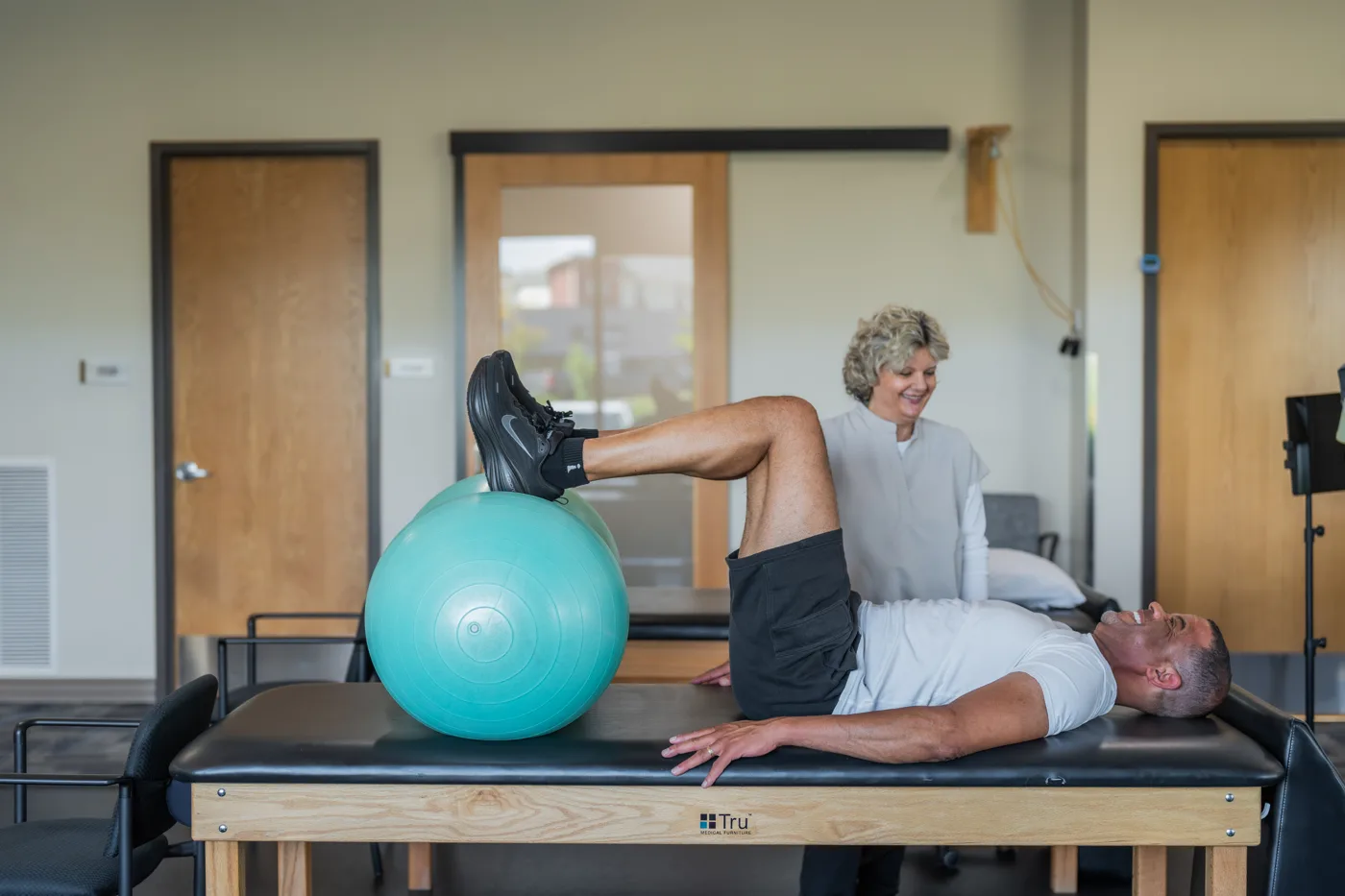
What healing looks like
Protect
Sling for comfort. Gentle motion. Nutrition protocol continues.
Move
Progressive motion and daily activities.
Strengthen
Resistance and function.
Return
Golf, swimming, skiing, and most activities return.
Finish
Strength and confidence continue to improve.
He chairs the database that tracks these outcomes.
Dr. Denard chairs the ShARC project, an international, multicenter prospective shoulder arthroplasty database with access to more than 4,000 patients. The outcomes he quotes to you come from data he helps collect.
Midterm Outcomes of Primary Reverse Shoulder Arthroplasty: A Systematic Review of Studies With Minimum 5-Year Follow-up
How reverse replacements hold up five years and beyond.
PubMed →Journal of the American Academy of Orthopaedic Surgeons · 2022Considerations for Shoulder Arthroplasty Implant Selection in Primary Glenohumeral Arthritis With Posterior Glenoid Deformity
Choosing the right implant when the socket has worn unevenly.
PubMed →EFORT Open Reviews · 2021Biomechanics of Anatomic and Reverse Shoulder Arthroplasty
Why the two replacement types move differently, and who each one suits.
PubMed →FAQ
It depends on the condition of your rotator cuff and bone. The MRI and CT review decides it, and Dr. Denard will explain the reasoning.
Most modern shoulder replacements last well over 10 years. Longevity depends on the implant, the fixation, and the patient, and Dr. Denard will discuss what the data show for your situation.
About 95 percent of patients do.
Most patients return to these. Contact sports and heavy overhead lifting are discussed individually.
Yes. Revision surgery is within Dr. Denard's practice; send the prior operative report and imaging.
Send your MRI. Get a real answer.
Dr. Denard reviews every MRI himself and records a short video explaining what he sees and what he would recommend. If surgery is the right call, you will know why. If it is not, you will know that too.