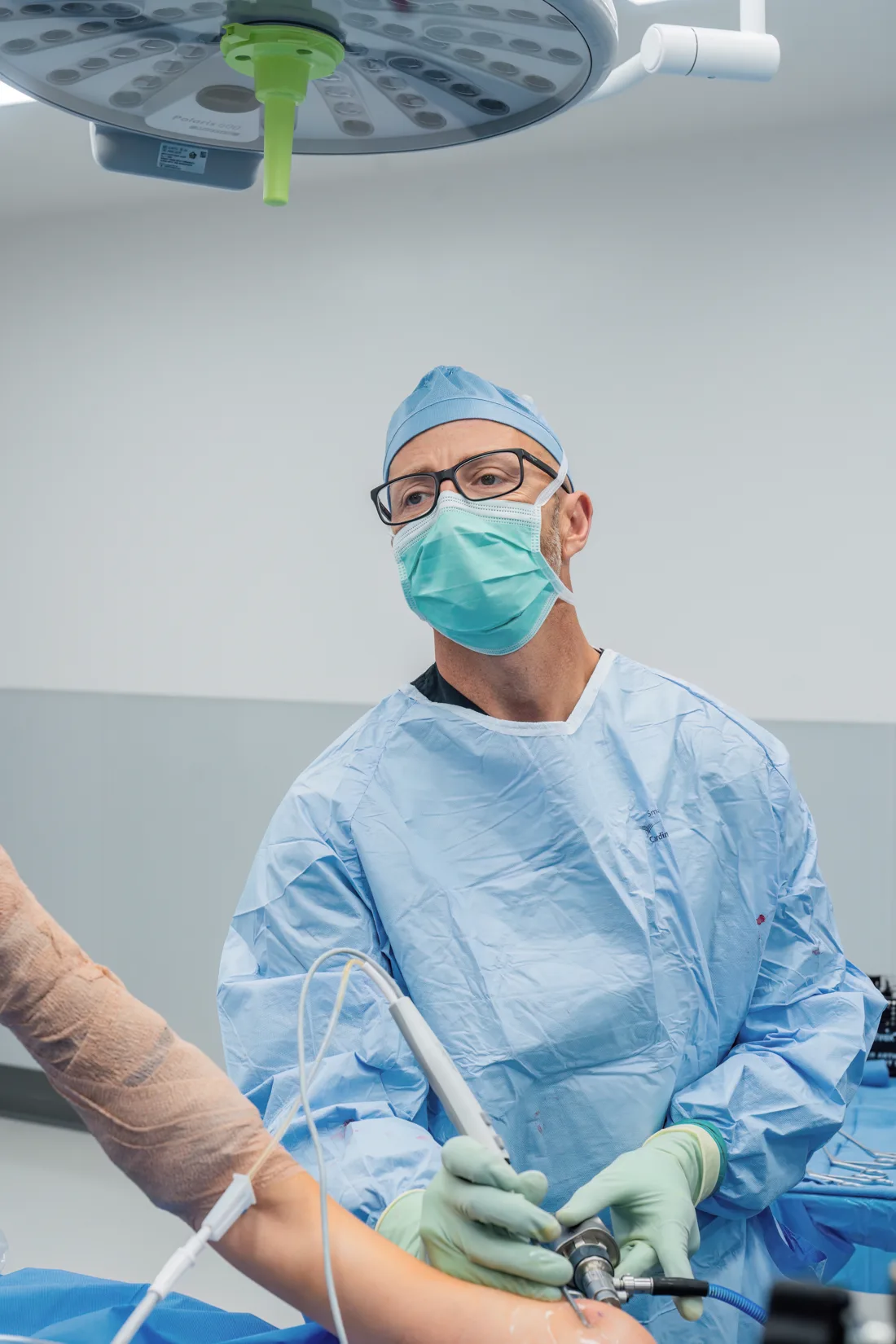
The tear you were told was too big to fix may not be.
Dr. Denard repairs more rotator cuffs than almost anyone in the world, including tears other surgeons have called irreparable.
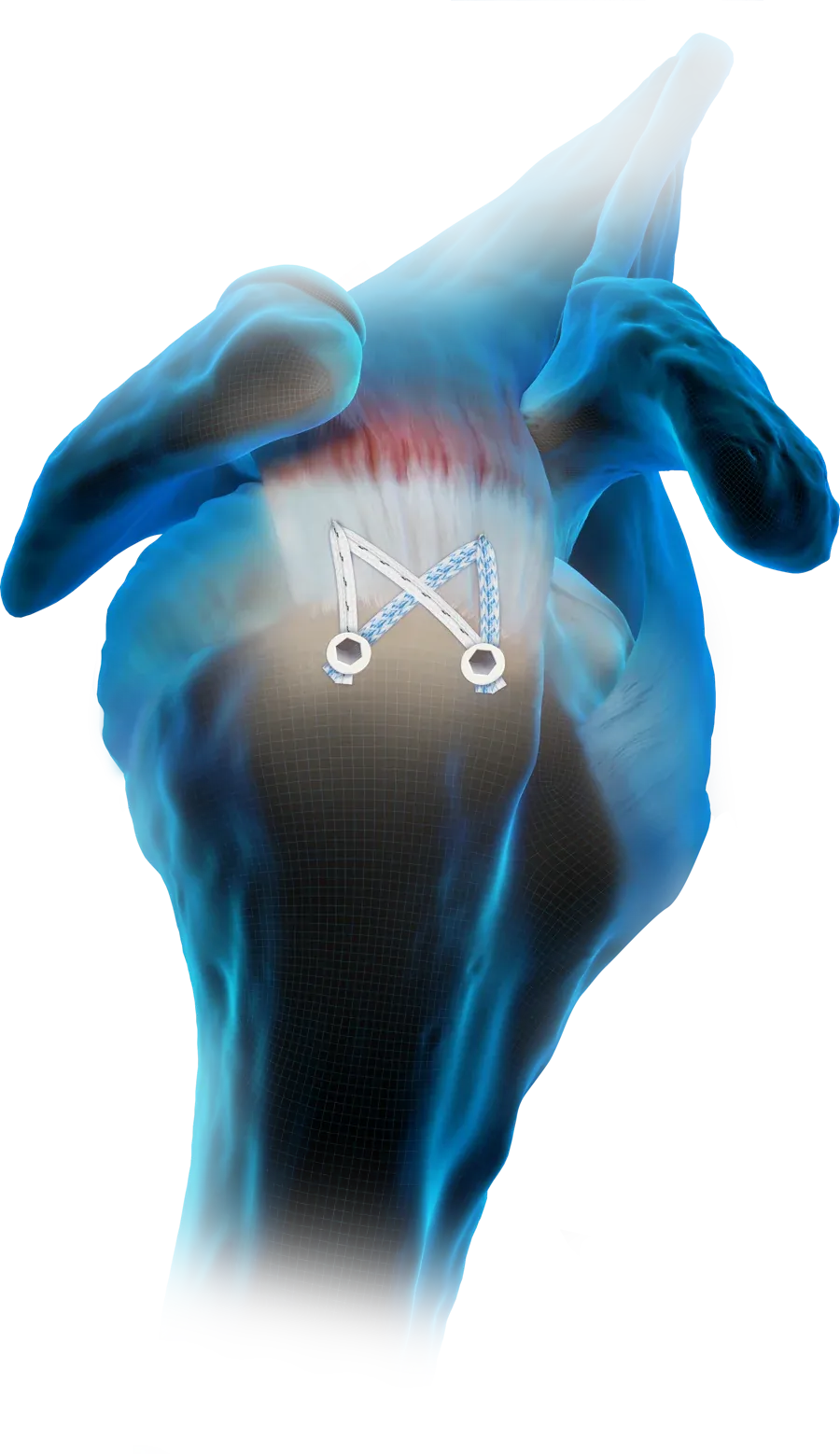
How a cuff tear usually shows up
- Pain at night, especially lying on the shoulder.
- Weakness lifting the arm out to the side or overhead.
- An injury you remember, or pain that crept in over months.
- An MRI that says "full-thickness tear," "retracted," "massive," or "atrophy."
If you have been told the tear is too large, too old, or too retracted to repair, that is exactly the kind of tear worth a second opinion.
Send Your MRI →Read the free non-operative rotator cuff guide →Repair the tendon. Protect the repair. Feed the healing.
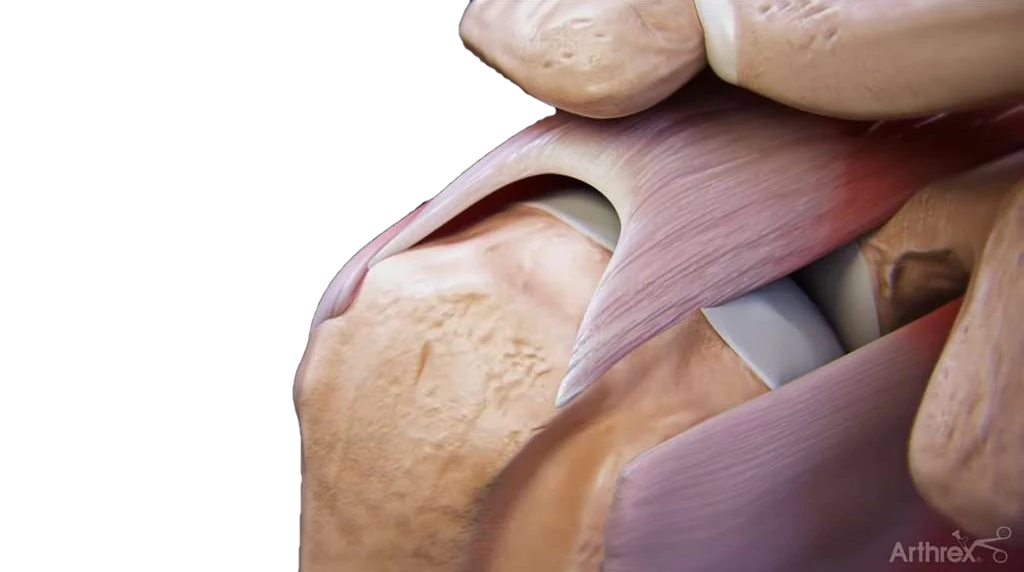
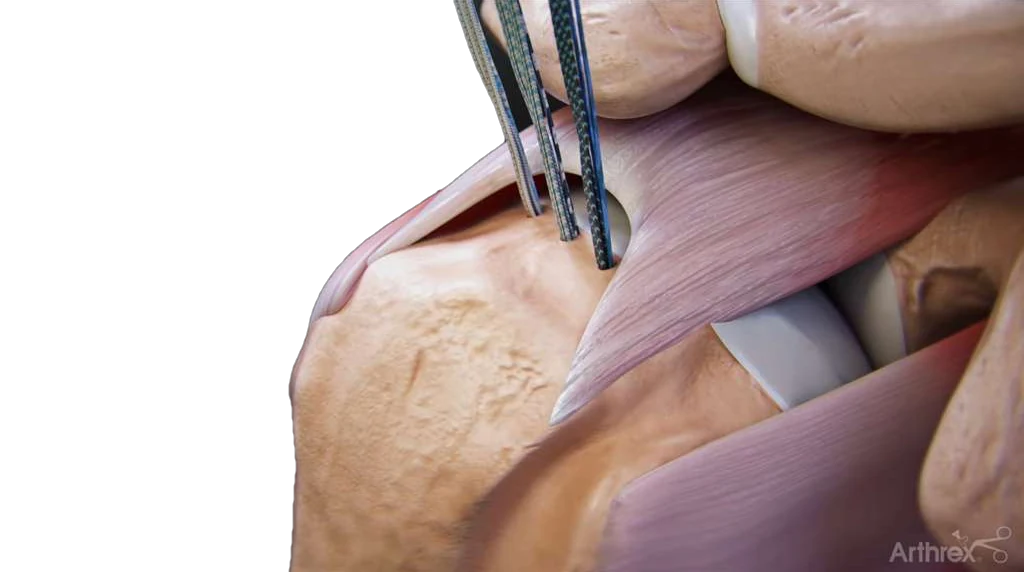
Cuff repair is arthroscopic: small incisions, a camera, and anchors that reattach the tendon to bone. Dr. Denard's repairs are planned for the tear in front of him, which means the anchor configuration, the tension on the tendon, and any augmentation are chosen for your tissue quality and tear pattern. For large and retracted tears he uses advanced techniques, including superior capsule reconstruction with allograft when the tendon itself cannot be brought back to bone.
Tendon retracted
Anchors placed
Tendon reattached
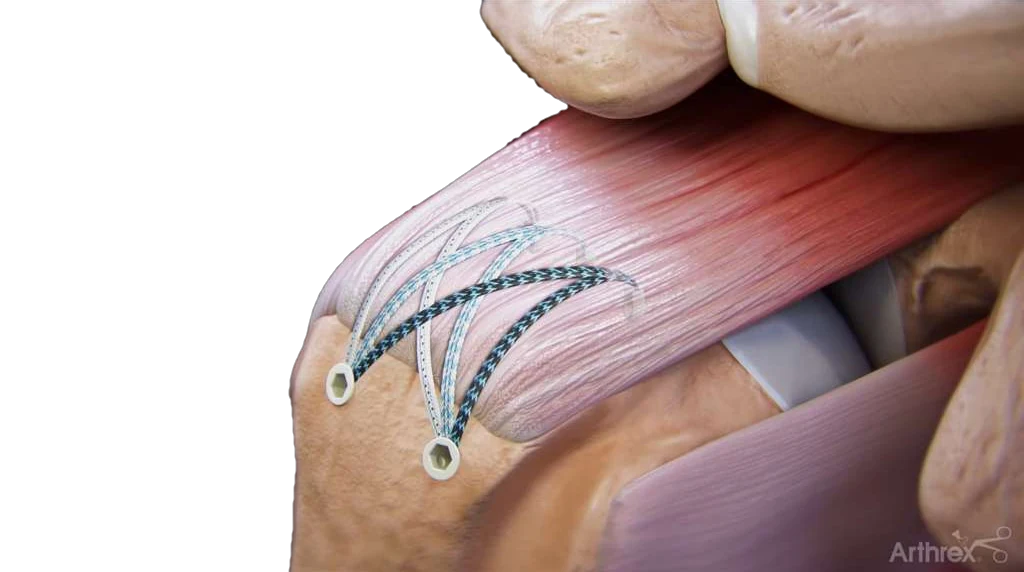
The repair is the first pillar. The other three protect it.
Surgery
The anchor configuration, the tension on the tendon, and any augmentation are chosen for your tissue quality and tear pattern.
Nutrition
Nutrition loading begins two weeks before surgery so the tissue has what it needs to heal.
Biologics
PRP (platelet-rich plasma) is given at the time of surgery for patients in the Premium and Platinum Care Programs.
Rehabilitation
Deliberately phased: a protected period so the repair can heal, then progressive motion, then strength. Written protocol, video demonstrations, and coordination with your local therapist.
Watch: How to maximize rotator cuff healing →
Home that day, with a nerve block and multimodal pain control.
Narcotic pills in total for most patients.
Of patients are off narcotics within two weeks.
On-call physician, and Dr. Denard calls you the evening of surgery.
Healing timeline
Protect
Sling. Pendulum and elbow motion. Nutrition protocol continues. The repair is healing to bone.
Move
Sling off. Progressive passive and active motion. First follow-up visit.
Strengthen
Resistance begins. Daily activities return.
Return
Sport-specific work. Overhead activity returns gradually.
Finish
Strength continues to build. Full recovery for large tears takes up to a year.
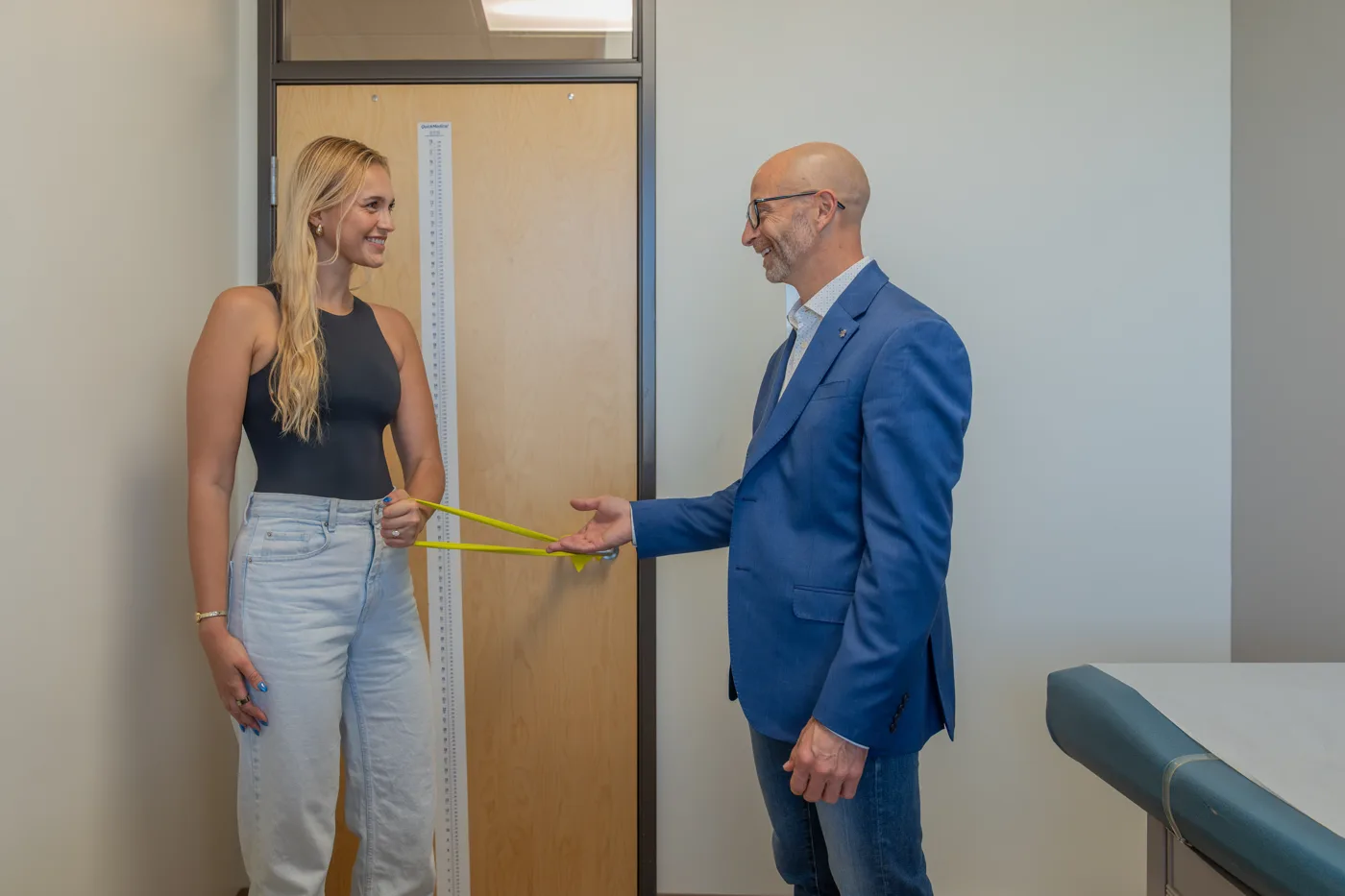
What the research says, and what Dr. Denard has added to it.
Dr. Denard has published extensively on rotator cuff repair, including techniques for massive tears, healing rates, and rehabilitation timing. Three papers are highlighted below.
Surgical Management of Massive Irreparable Cuff Tears: Superior Capsule Reconstruction and Rotator Cable Reconstruction
How tears that cannot be stitched back to bone can still be reconstructed.
PubMed →Arthroscopy · 2022Dermal Allograft Augmentation for Rotator Cuff Tears
Reinforcing a repair with a graft so it holds in weaker tissue.
PubMed →Clinics in Sports Medicine · 2023Arthroscopic Rotator Cuff Repair: A Review of Surgical Techniques and Outcomes
What the evidence says about how cuff repairs are done and how they heal.
PubMed →FAQ
Often yes, even when it has been called irreparable. Tear size, retraction, and muscle quality on MRI all matter. Send the MRI and Dr. Denard will tell you.
Yes. Therapy happens at home with your local therapist or with video guides, and follow-up visits are done by video.
Typically about six weeks for a full-thickness repair.
Usually once out of the sling and off narcotic medication.
PRP (platelet-rich plasma) is included in the Premium and Platinum Care Programs and given at the time of repair.
That may point toward replacement. The MRI review will sort this out.
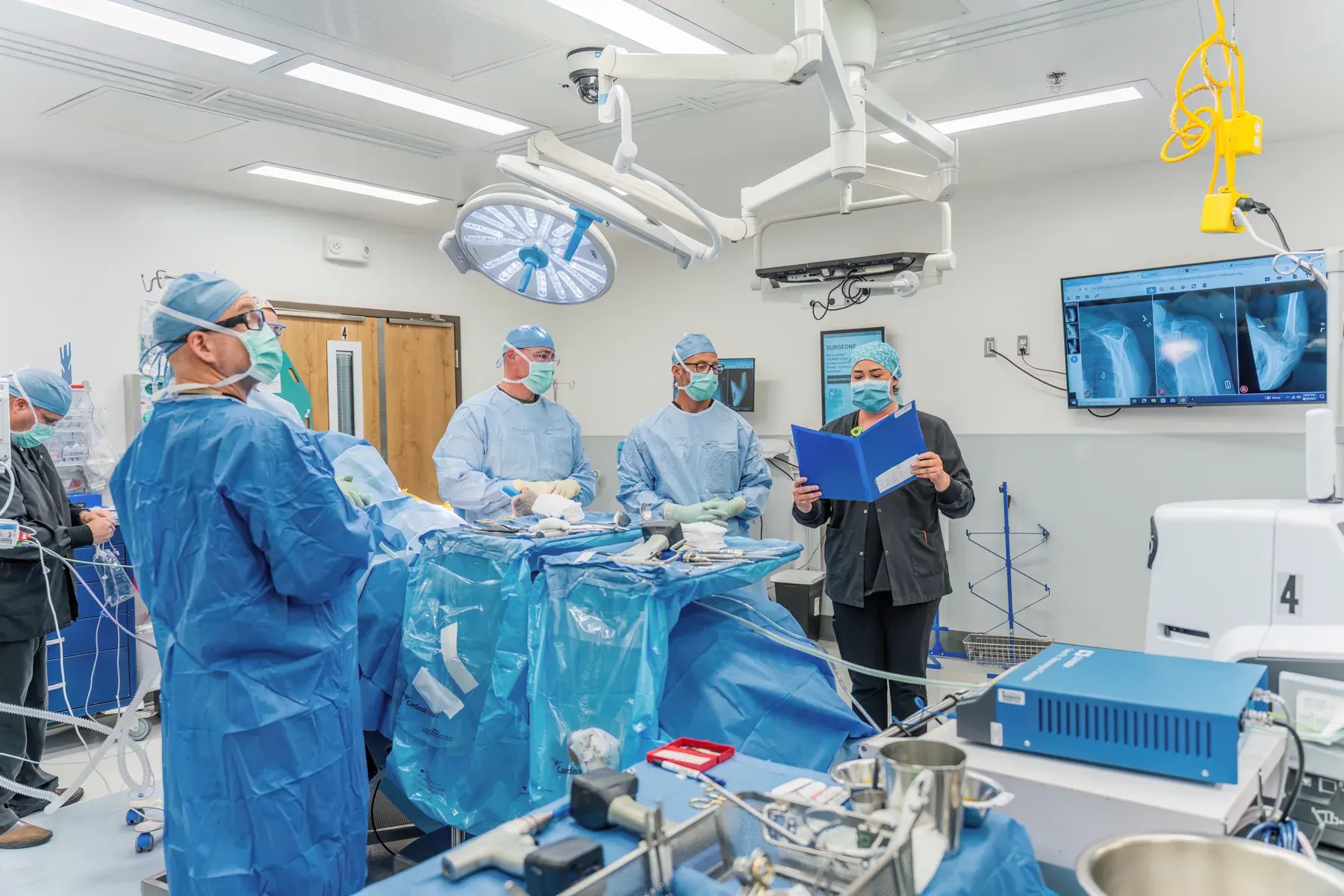
Send your MRI. Get a real answer.
Dr. Denard reviews every MRI himself and records a short video explaining what he sees and what he would recommend. If surgery is the right call, you will know why. If it is not, you will know that too.